
bite sized: sony's digital disaster
Transcript
Hey guys, it's Nate, and it's time for another Bite-Sized. And this time I thought I would bring on Friend of the show, patron, and just all around just just the incredible. Well, he's the incredibly inedible trash turkey, but he's also my friend and my pal. So, and yeah, so yeah, Turkey.
Speaker B:Thanks for having me, Nate.
Speaker A:Dude, thanks for this is kind of like a little last minute e, but you and I I the other day. I was bored and I just jumped into general voice chat and you jumped in there with me at one point in time and another community member, Eric, a.k.a. E-Rice. And we were sort of just talking about a lot of stuff. But then you and I kind of got on to everybody's favorite topic these days, which is Sony's decision to— Well, basically, I don't know. There's so many negative ways to do this. And actually, I think you and I kind of touched on it too. It's just like, I know that I talked with this a little bit about with Spike when he was in there, but it's like, I'm just so discouraged by just the negative tilt of just all of the news cycle lately. So I'm trying to not be so negative.
Speaker B:What stage of grief are you in, Nate? Let's start there. I'm just in distress, man. I'm just—
Speaker A:I am, I am in distress, brother. Like, it's one of those things where, so Sony has made the decision to go, you know, starting in January of 2028, they're going to cease production of discs. And, and I think there, there is some language where like there's certain things that they're going to continue manufacturing that are, have already been in production. Um, and they're going to honor agreements and all that other stuff. But they're, what this is, it's just, it's an indicator that the PlayStation 6 generation is not going to have a physical media reader, uh, and that they are, they're basically signaling. And cause like, that's the thing is like, they're not actually talking about the PS6 yet. Like they haven't actually confirmed it yet.
Speaker B:Right.
Speaker A:They're just saying in 2028, starting January 2028, we're not doing physical. We're not printing any new physical discs kind of thing.
Speaker B:Right.
Speaker A:And everybody knows in a lot of ways that that is sort of a sign that yes, the PlayStation 6 probably going forward, there will not be natively physical PlayStation 6 discs. And there's a lot of stuff where, like, I've read some people, like, some people have said, like, well, maybe it's like, depending on the file size of some of these, you know, they might not, it might be the whole thing where it's like, it's too big for the Blu-ray format because there is a cap there. And we do have some games.
Speaker B:But, but, but how many games? So, so what? You've got different sizes of Blu-rays. You've got one that goes up to 100 gigs. So even something like, The GTA 6 supposedly could fit on 2 discs because it's like 160, something like that.
Speaker A:Mm-hmm.
Speaker B:So you're talking 2 discs. We've done 2 discs ever since like Xbox 360 era. I don't know the breakdown of the cost of a disc, but I would say it's probably less than a game key card. And Nintendo's still doing that.
Speaker A:So even—
Speaker B:I see what you're saying. And also, let me put this out there. I don't— I'm not advising anybody to invest in this company. I can't even remember what it is. But there's been news about a company that's working on a 1 terabyte disk for like data centers. So like to help with cost of storage. So like, we will get to a point, if they want to, where discs could be as big as they want. You can't tell me that GTA 7 is going to be over a terabyte, but whatever it would be, whatever game. But I'm just saying.
Speaker A:Like, even sort of bringing up Nintendo though, like, they're essentially just using like flash memory. They're just using flash memory essentially for their, for their discs. So it's like, and that stuff, You know, you can have 2 terabyte flash memory cards. So the, like, yeah, maybe you're limited by like the disc size. And honestly, a lot of games on, on current gen hardware, like the PS5 and the Series consoles, like it's, the games are even from the disc, they're installed on your hard drive. And then—
Speaker B:Absolutely.
Speaker A:In a lot of ways that, so the, the disc actually just acts like a, a key.
Speaker B:Now, there are a lot of games, though, that when they write to the hard drive, that it's writing to the hard drive of the data that's on the disk, meaning the data is there. It writes to the hard drive so that it can access it the speeds that it needs, right? So like, meaning the data is on the disk. You're not having to download more data. That data is just then transferred to your hard drive so the system can access it fast enough to play the game.
Speaker A:Yeah.
Speaker B:So it's not a key. Some of them might be. I think, you know, Indiana Jones, some of those high, you know, profile ones that were like essentially a game key. I think a lot of Xbox started doing that and that's bogus. I would say if you, they don't have every game, but doesitplay.org is a great website that tells you, they try to play a game on the physical media and they tell you like, they give you like a rating.
Speaker A:Yeah.
Speaker B:A yellow, or a green as far as like, you know, what patches are needed? Can you play the whole thing off of the medium, whatever it is, and kind of the state of it, you know, when it's released? So you're right. They have been starting to make it where maybe not all the data is there, but a lot of them are. I think I heard—
Speaker A:Yeah.
Speaker B:I can't remember who it was, but said about 70-plus percent, around 70% of games on PS5 were complete, or at least a, I would say, a functional build of the game is available. Also, by the way, when you say, and this is what happened to Nate, when he said physical media 3 times, I do appear. So that's why I'm here, by the way.
Speaker A:Mm-hmm.
Speaker B:Um, yeah, yeah, yeah.
Speaker A:I summoned you.
Speaker B:That's, that's all I wanted to say.
Speaker A:Because, because you are sort of one of— on, on the Discord, you are one of the more, uh, I'm not gonna say outspoken, but like you're one of the more vocal, um, physical media defenders. And I think, I think some of that is too— it's just like when you and I were talking, it's like you're I, you sort of, you gave yourself some sort of disparaging label, but I would call you more of a retro-oriented gamer. I think like you just, you like the older stuff, um, as a general rule. Um, and you do sort of tend to that. And like, I think, I think, I think it's important to, to just sort of state too, it's like, I'm not a fan of Sony moving away from physical media. In fact, and I think in some ways it is inevitable. I honestly, I thought it was probably going to be next gen. I do think like the decision is a little preemptive. And, you know, we've at this point in time, we've all seen like a plurality of videos talking about like the numbers and the breakdowns and what does this all mean. But it's the vast majority of their, their business is conducted through digital storefronts. Like, you know, it's like, like there's one sheet where they show it's like 95% of their income from Sony or from PlayStation comes from digital transactions. Now that includes DLC, that includes battle passes, that includes like all the microtransaction stuff that's like— and that's— there's a whole pile of games that are only available digitally.
Speaker B:Right.
Speaker A:So a lot of like, a lot of independent stuff, um, even like right now, like, uh, Hades 2 and, um, Hollow— uh, not Hollow Knight, Silksong, both released as digital first. And I think there are physical versions of those games coming.
Speaker B:Yes, I believe so. Yeah. And, and I, I agree with you. Um, I guess, and I, I don't expect a company to say, Because they have a marketing department and they have people that they have to— shareholders that they have to make happy and make money. I get that. As far as the 5%, I mean, it just seems a little disingenuous the way in which they're kind of— if you were to tell someone like, oh, only 5% of our games are purchased physically, you would think, oh, well, man, so like 95% of games are purchased digitally? Well, no, it's not. It's like you said, it's more of a revenue thing. So they're just, it's not apples to apples. And so I think that with that moving forward, I mean, a company's not going to be like, hey, we really want to do this where we maximize our profit at your expense. So what we're going to do is we're just going to kind of, I'm not saying cook the books, but change the statistics in a way that kind of, in a simple, if you just say that, it kind of makes someone think, well, I guess it's inevitable and it's just going to be like this. Whereas in Sony, when you look at the split between their first-party single-player games are more either 50-50 or actually, I think, oh goodness, I can't remember what game it was.
Speaker A:The Insomniac leak data. That's what you're talking about.
Speaker B:Yeah. So like all that was either 50-50 or maybe even more percentage being sold physically. So like the actual game. So I think a lot of that revenue that you're talking about, it's just digital revenue from battle passes, you know, horse armor, and like in other games that are the— and I can't remember what is the term, Nate, you talked about it with Destiny. Games as a service. So it's like the games as a service games that they want to say, you know, that's where their business is. And if we could just get rid of these old people that like physical games, Maybe, or they'll kind of succumb. I think that's kind of, we're just going to move them along. And maybe I'm wrong on that. Maybe not. But I think that they've really messed up here.
Speaker A:I think part of it, I definitely think it's a mistake because they're getting a lot of bad press. Now, I do think that some of the bad press, and I'm going to say something that maybe some people watching or listening to this would be offended at. I think that the hardcore, the people who are sort of super online and super active in these discussions in online spaces, are actually a very vocal minority. I actually think that the general consumer is not aware and doesn't really care. I think that's one of those things where there are a lot of like— because I've been watching the online discourse in sort of Twitter and the online spaces and it's like every time Sony posts something, like they just get bodied in the comments.
Speaker B:Right.
Speaker A:And I, I think like there's, you know, it's one of those things. Again, I think this is a mistake. I think it's preemptive. But, you know, sort of looking at the numbers too, and it's, I, the, the other number that's come up again is that the games side of that, when you break down the physical versus digital sales of just gaming, it is more of an 80/20 split. Currently, like this year. So that, that Insomniac leak, that was a few years old at that point in time.
Speaker B:Right.
Speaker A:And the market has been trending aggressively towards digital. Again, I'm just going to come out and say, like, I really thought that this next gen would probably be the last gen for digital or for physical. And they would just sort of like let this thing really tail off naturally. And honestly, I, I, what I was kind of hoping is like, and what I've heard other people talk about and Is that like, because part of it, part of it is that physical printing, physical discs cost them more money and they make less on those. That, that's the reality of it. They, you know, it's not that it costs tons of money to print a disc in a case and all the other things, but by the time they sell out, sell that to retailers and, you know, all the different hands that take a piece of that, right, they're getting You know, I don't know.
Speaker B:So what kind of level of like, what if people just don't buy it? I mean, I guess we are the, I guess you could say the vocal minority. And I do agree with you. I think people are going to go to the store and they're going to see a box and it's going to be a code in the box. And they're going to be like, oh, great. Here's my game. It's a code in a box or whatever. And they might not think of it because I heard one person say this and I thought that was a, it was a good, example of this is like, there's people that are like sneakerheads and they like love sneakers and they like get into, um, collecting and knowing all the colorways and variants and this stuff. I don't care. I, I've bought shoes at Goodwill because they're cheap and I'll like wear them out. You know what I mean? Like, I don't care. So like, there's, there's people that are just going to be like, cool, I got my latest Call of Duty and it's a code in the box, I don't care. It's a consumable thing and I don't care anymore. Like, it's just a thing and it's not, dare I say, art, Nate. It's not some kind of thing to hold on to. It's just a game, Nate.
Speaker A:Come on. Well, okay. And so I think there's actually, Like, this is kind of what I'm hopeful for, and I have no reason to think that this is a possibility other than I just want it to be.
Speaker B:Right.
Speaker A:Is that I think that similar to how music went predominantly digital and how we're seeing a resurgence in vinyls, I think that there could be a market for— okay, and so there's a part of me that thinks, and this is some, again, pie in the spice pie-in-the-sky speculation, but I, I really wonder if at some point in time Sony— because one of the big things is people are concerned about their libraries going forward and how are they going to engage with their physical discs that they already own.
Speaker B:Right.
Speaker A:I think Sony will release some sort of physical media reader so that people can access their PS4 and PS5 games that they have discs for on their PS6. I think they will. I think that'll make a lot of people angry because it'll be like, it'll feel like a slap in the face. But I think that's a bit of a conciliatory move. And I think that honestly, if they see value in a market and sort of releasing boutique versions of these physical games. So we have things like Limited Run, we have things like, I don't know, um, Limited Run is the big one, but there are smaller outfits that publish this stuff now.
Speaker B:Yes.
Speaker A:Part of the problem though is that all of this stuff gets published like through Sony.
Speaker B:Through Sony.
Speaker A:Through their plants. So maybe Sony will see some value in sort of opening up some of this stuff for boutique markets because they're not going to completely not print Blu-rays ever again. It's just that the primary facility in Germany or Austria is going down. Like they, I think they have other facilities. Again, I'm not super, I'm not an expert on Sony's holdings or anything like that.
Speaker B:Yeah.
Speaker A:But it's, it's one of those things that I think there's a possibility that if they see that there's a market for more of the, again, like the physical sort of thing where they could come back and do like boutique limited run releases and allow sort of maybe smaller publishers to do that stuff. But I think that I think there's a couple things here. And one of the things you and I talked about is that I think what Sony is also trying to do here, and maybe people don't see it this way, I don't see, I don't think it's all evil corporation trying to like screw the customer. I think some of it is like Sony is trying to keep costs down to themselves and they're trying to sort of say like, they're trying to sort of maximize profit without you know, raising prices on games again.
Speaker B:Right.
Speaker A:And so what they're saying is like, hey, a way that we can do this is we can keep the, the price of the new console lower without subsidizing that by not putting a physical drive in there. And then that will put people into essentially a closed garden sort of economy where we will be able to, on first-party stuff, we'll be able to recapture 100% of that revenue. And then on You know, third party, second party, whatever. Like that, whatever the split is, I think they get like a 30% rip on that. And so, and and it's because I I think that's like, and I know like I don't want to sound like a shill for Sony, but the reality is like the market is just not good. It's just not good. It's not good for consumers. It's not good for electronics. And the way that is like they've been planning this thing for years, and if they sort of walk. From what I understand, and I've been listening to some coverage of this, if they walk away from like the RAM suppliers and this stuff at this point in time and say, we're just going to call it out, it could be years, like years before like they get sort of back in place. And I think the other thing to sort of keep in mind is like, they're not in the same position that Valve is in. So it's not like, you know, people see the pricing of the Steam Box and they're like, oh, that's $1,000. That's $1,200, you know, however much for the Valve. Like, Valve is not like a well-regarded manufacturer. They don't have a history sort of providing, and they don't have the economy of scale and the contracts and the long-term relationships that Sony does with these suppliers. And they're not even in the same situation as Xbox, who, you know, like, just has really—
Speaker B:Right.
Speaker A:kind of, you know, crap the bed in, in, as far as like supply and all those things. So I do think it's that it's like, it's, it's not all, like I said, it's not all evil corporation trying to sort of like black hat us, right? It's, I think there is somewhere they're just, they are trying to be a little more economically mindful. And this is a way that they can sort of, you know, one, they can push people into, so, uh, into arena where they are able to extract, you know, more profit for less overhead. But I think the, the other thing too is like they are trying to keep costs down because like, I don't know, it's—
Speaker B:I, I, I guess they are. And, and I, I could see, but I guess, and maybe just, maybe I'm going to answer my own question here, but what makes that PS6 different than just a PC at that point? And what gives them, uh, You know, anything that gives you a reason, because I think that this kind of debacle, maybe I'm wrong here and maybe it's just YouTube going crazy, getting clicks on, you know, people getting mad about people's physical media going away.
Speaker A:But like, where would you put this as far as like— I'm not happy. that they're doing this.
Speaker B:I know, I know, I know you're not happy because honestly what it does is, is it doesn't give you a choice to go get that physical game, um, that's 5 years old for $20 now where you're going to be spending $69.99 on the PlayStation Store if you want it, unless it's on sale that day. You're going to be locked into their ecosystem. And I just don't see that being Like a big enough draw to people. I think that maybe they'll make more money per sale, but will they lose that generation? Because I think this is like, I mean, you went from legit taking, I mean, the reason I bought a PS4 were 2 reasons. A, because I liked indie games and I liked their support of those.
Speaker A:Yeah.
Speaker B:I liked that those were coming out and I could maybe get those. At that time, I wasn't really that concerned about getting those physically, but I just thought that was really cool. The second reason was the, this is how you share a game video.
Speaker A:Mm-hmm.
Speaker B:And that right there just put the boot on the Xbox One, their neck, and they never recovered. They never recovered, not in this generation, not in that generation, not in this generation. And I really feel like Sony with this, being the first to just pretty much signal it, say, we're not going further with physical media. And guess what? Like, to your point, we're not going to lay out any— we're not going to like think that this is a big enough deal that we're going to have some talking points or discuss, this is how we're going to move forward with your physical media. This is, you know, the things that we know that you'll be concerned about. And this is, you know, proactively, we're going to talk about this. We just, drop it and we just realize, oh, is that a big deal to people? I mean, I'm sure that they, at some level, somebody knew that, but on the upper echelon of Sony, I don't think that they knew that was that big of a deal. What do you think about it? Yeah.
Speaker A:Well, let's go back. You were saying it's like, what is going to differentiate the PS6 from PC? I think there's The, the, the, the thing that has always like, because, and let's, let's just be honest, consoles are essentially just very specific PCs. They're running custom OSs. But the, the fact is like that the console is plug and play.
Speaker B:It is.
Speaker A:Plug it in. You put your, well, you used to put your disc in. You might need to do some updates. But like, you could just pretty much play it out of the box and you didn't have to worry about playing with settings on any cards or any of that stuff. Um, so I think that that will always be a side of like the console experience where it's going to be a lot. It's, it's because it's going to have fixed hardware parameters.
Speaker B:Like, right.
Speaker A:You're not going to have the, the messiness that comes along with PC. PC has higher highs. It runs things, you know, the high-end rigs. One second.
Speaker B:Yeah.
Speaker A:Yeah, I just— yeah, I just coughed right into the microphone. I was going to mute that. And then anyways, so PC always, but that sort of again, you have the higher highs, but like there's a lot of troubleshooting. There's a lot of, you know, you have to check your settings and all the other things. Like there's a lot of tweaking that you have to do behind the scenes. And for some people, that's like, they love that. That's, that's not me. Like, that's never that. And so I do, like, I have a gaming laptop and I play some stuff on it, but, um, I'm mostly, I'm a console gamer because it's ease of access, ease of use. Um, and so like, you've got that going for it. I think though the other side of it is, and this is what I would say, is I think that actually Sony has probably done the math on this. And I've seen just some things out there where there was one guy saying like, you know, talking about there are a lot of people who've been canceling their PlayStation Plus subscriptions, myself included actually. Um, like instead of auto-renewing in December, like I turned mine off and I might go back to like the PS Plus Basic or whatever. Because I need that to play online stuff. But anyways, you know, and that is an area where they are going to see some damage. Like, that is going to apply pressure. But he said, like, he's like, listen, he's like, we don't know the numbers, but he's like, let's just assume there's half a million of you. He's like, do you realize that out of all of those users, like the the 50 million users or whatever that they have on this service, that's less, that's like 1%. That's less than 1%.
Speaker B:Yeah.
Speaker A:Um, and it's, it's kind of one of those things where, and this is kind of what has me thinking, that is like, again, that very like vocal minority. I, I don't, I don't know. I mean, who, like, that's the thing is like right now there's a lot of things we don't know. Like you brought up the fact that like Sony hasn't really talked about this outside of like, hey, We're going to cease production of this plant starting January 2028. And it doesn't mean that they, they won't backtrack, or— I, I think it's highly unlikely.
Speaker B:Yeah.
Speaker A:But it doesn't mean that they won't. Maybe there will be enough pressure because like what I'm seeing is that there are some countries, uh, governments who are getting involved in this and sort of, um, talking about this. I, I honestly think what, what this will force though is that digital rights, consumer rights on the digital front will have to become more defined.
Speaker B:Right. We can't call a purchase a purchase anymore. We'll have to say you have a limited license to something when you click a— you'll click the limited license button, not the purchase button, because Sony doesn't necessarily sell you something that they own. They sell you a license to something that they can revoke. To some extent, right?
Speaker A:They don't want— I think that's the thing too, is like people, people don't seem to understand. Like, I know that there was like the 500 movies or television shows or whatever, and it's kind of like, I, I mean, I, I don't— like, what I think would be really interesting is to see how many people that actually affected. Um, you know what I'm saying?
Speaker B:I guess I get it. I get that because, I mean, it was in the UK, but I mean, it was StudioCanal, and so you're talking Terminator 2 And I did hear one person say, and I don't know how this would have actually worked, is if you had an account to StudioCanal, maybe you still could watch it. And I was like, how would that work if you bought it through the Sony store? How are they— how is Sony or StudioCanal going to know that you bought it?
Speaker A:Movies and digital streaming and digital purchases have sort of— there are a few like universal options. So like they, they have done a much better job of that in some ways on, on that storefront. Like there are some services that like, hey, you buy it here and you have access to it here, here, here, and here and here, you know?
Speaker B:Right.
Speaker A:But that's not everywhere.
Speaker B:Right. And so I agree with you. I think that they're probably just trying to save money and they're saying, okay, These are our options. We continue to do a disc and we only recover this amount of money per sale, or we go all digital, which because we've, A, sold a console that is all digital, essentially, we've started to get the consumer to think, well, that's the future, right? As well. Well, And so we just kind of ease them into this all-digital future. Um, and again, I, hey, I, I bought a copy of Mercenaries Playground of Destruction on PS2 today. Like, I don't, I'm not the guy buying a PS5 disc. So maybe if I would have bought a PS5 and, you know, buying these things currently, I don't, I don't really have any room to talk. I just think that things that are going to be lost by losing physical media for like the next generation and generations to come is kind of a big deal. Unless, like you said, they get the digital rights stuff to really be consumer, like good for the consumer. I just don't see that being as a company. Again, like to your point earlier, their goal is to save money. It's not to—
Speaker A:Yeah.
Speaker B:help you out and make sure you have access to this stuff in the future.
Speaker A:Yeah, but there's also like a certain line where you don't want to sort of like, I think one of the big questions here with all of this though has been like, so there's, there's also the, the data breaches like, uh, Last Stand Media's, uh, Colin Moriarty lost his PlayStation account for a couple of days. So it's like there, there are like legitimate concerns even outside of like, It's like, they're like the profile security, my library security. Like, absolutely. It's one of those things where like there, there are multiple vectors where I'm like, actually, Sony, like, I'm not concerned that you're trying to like, you're, you're sort of moving ahead with this because like anecdotally, so there are a couple of things here like too. And I was thinking about this, um, Matthew Ball, he's now the chief strategy officer over at Xbox. But a couple of years ago, he did a presentation where he actually demonstrated that over 50% of the revenue generated in video games comes from like 10 games, like Roblox, Fortnite, Minecraft. Like all these are pretty much strictly digital. They're like, they make, they are generating massive amounts of revenue. It's like 10 games.
Speaker B:And I agree with you. And I think that parents out there should be ashamed of themselves for not giving their kids proper video games. Okay, continue.
Speaker A:Well, yes, yes, it is kind of disgusting and gross. But, but so I think that the digital market just, yeah, I, I do think it is sort of inevitable, but all of that sort of going is like, I, I was, oh man, now I got sidetracked. Now I got—
Speaker B:I interrupted you. I'm sorry.
Speaker A:No, it's all right. Um, it's okay. But I, I just do think like, It's one of those things where, man, now—
Speaker B:Well, you were talking about how over 50% of the gaming market is essentially 10 games.
Speaker A:Yeah, the revenue generated by those 10 games basically makes up the bulk of the market. I think it's something like 60% or 70%. It's a ridiculous amount of the revenue generated comes from basically 10 games. And that's why, I mean, that's even why Sony was really pushing as hard as they were into like the games as a service, you know, model, because it's like, if you can get one of those to hit, like you're good. And it doesn't even have to be the size of Fortnite.
Speaker B:Yeah.
Speaker A:Yeah.
Speaker B:No, I, I agree. I mean, I think that that's, that, that's a kind of a shame as far as gaming. And that's where it's in, it's like, you know, stage of grief I was talking about is just realizing like, I'm just not a typical gamer. I'm just not that, that's not me. And that's okay. I mean, I don't, I don't have to play these things. And I think that's kind of crazy to think about that 60 to 70, that doesn't seem sustainable. And so that's why I would say like—
Speaker A:I don't think it is.
Speaker B:I mean, I think that's gonna crumble and then you're gonna have 1983 all over again where things aren't going to get any return on their investment.
Speaker A:Yeah, I don't know that it'll be as bad. I do think if some things aren't addressed, that yeah, we could sort of— the bubble could pop. But I also look at a lot of this as rightsizing of the industry. I think COVID times came, there was a massive explosion, they were hiring a bunch of people, they were borrowing a bunch of money. Like it was grow, grow, grow, grow, grow, grow, grow. And none of it was done very smart. I mean, the only Nintendo, Nintendo's the only company that didn't sort of grow explosively. They also haven't had to lay off like, you know, 3,200 people or even 300 or 400 people.
Speaker B:Like they gave their people a raise. And I mean, I'm not going to say that Nintendo made COVID, but like they had Animal Crossing ready for it. So it was just a weird conspiracy theory, right?
Speaker A:Let's, let's put on the tinfoil hats here. Um, yeah, Nintendo, uh, it didn't come from China. It came from Japan.
Speaker B:Yeah.
Speaker A:Nintendo was ready for that. But I, yeah, I just don't, I don't think there's any like really fun answers here. I think that like people, people don't want this. People don't like this. And again, I'm not a fan of this. Like I'm actually like kind of what I really wanted to see happen was like that the stuff you really love that is really important, really special.
Speaker B:Yeah.
Speaker A:Like one of my prized possessions is a physical collector's edition of Shadow of the Colossus remake by, by Bluepoint.
Speaker B:Yeah.
Speaker A:I, I love that game and that is such like a cool, like physical thing. And actually I think there's something important to physicality. Like I actually, yeah, I'm, I'm kind of like sad because like I do feel that the, the digital sort of only model actually makes it a lot easier to just not engage with these things on, on a transcendent level. It makes it easier to just sort of be mere consumers. It makes it easier to just sort of treat it as something to be sort of used up and then thrown away when you're done.
Speaker B:Right. I think one thing that, as far as like the ROM fatigue, that's what I'm a little bit worried about when you have like an eShop, or not an eShop, but a PlayStation Store with 9,000 games on it. I'd heard somebody say this and I thought it was a good point. Physical media is a curation process.
Speaker A:Yeah.
Speaker B:Meaning if somebody made a physical copy of this game, it must be something that is above others, you know, as far as quality, as far as gameplay, whatever. I mean, I like to pick up, to your point earlier, I like to pick up indie games, but I usually don't pick them up on launch. I pick up the ones that are kind of a step above a double-A kind of indie game. So like this year I picked up Ball Pit and UFO 50. And like those games, you know, getting a physical release is like, okay, they're better than, you know, the $2 eShop game that you, that might be, you know, right next to it on the, on the store. And so having a store of 9,000 games versus going to the store and seeing 50 games.
Speaker A:Yeah.
Speaker B:You know, it kind of, you know, I think is a cool way that, you know, since the beginning of games or since, you know, there was only physical at one point. But when we had digital games, when they would release physically, it just, it had a little something special to it. It said, hey, I'm on a shelf. I'm good enough to be here. And so, you know, it's kind of a way that it's curated. I mean, we have ways of, you know, we listen to podcasts, we get on Metacritic, we look at different scores and we can figure out games that we like or people that suggest games that are good and we should try. But I think the physical piece of it, is, is another way to say, hey, this is something special, or could be.
Speaker A:No. Yeah. And like, I'm, like I said, my pie in the sky, sort of like my hope is that like we will come back around to that. Um, but I don't know. Like I said, I, I think one of the things though too is just like, I, I don't want to sound like a Debbie Downer, but—
Speaker B:Well, let's talk about the, the solutions. What can we do, Nate? I heard a great podcast. If you haven't listened to it, and you love retro like I love retro, you should listen to, uh, the DF Retro Super Show, uh, with John Linneman and crew. I think it's a super— like, these guys are super smart, and if you like retro stuff— but they had a guy on, uh, from Evercade. So Evercade is a small, um, handheld. So they have like consoles that have like built-in games, let's say. You know, a Capcom handheld would have like, I don't know, 20 Capcom arcade games built in, but then it accepts cartridges. So again, these are older games, so they're not for everybody, but you can buy physical copies of, you know, physical cartridges that like, um, you know, that would have anywhere from like a single indie game to maybe like 4 or 5 arcade games by Capcom, SNK, You know, whoever, right? Uh, Data East, I think they— but they have, they have made, I think, or have released, let me think, about 900 games on cartridges.
Speaker A:Mm-hmm.
Speaker B:So I think that market is something that says when, when physical goes away with the, the big, I think, 2, I think Nintendo will hold on because I think the Switch is gonna have the legs of like, the PS2. I think the Switch, the original OG Switch with the backwards compatibility, I could see it getting indie releases and small releases for quite a while beyond what, you know, so we're going to have a lot more years, I think, of OG Switch. And then, so I'm pretty much, that's what I'm buying. But people like the Evercade group, Uh, like the, um, the SNK, um, AES Plus. So have you seen that?
Speaker A:Um, no, no.
Speaker B:So SNK is re-releasing the Neo Geo, like legit Neo Geo and legit cartridges. Now they're $100 a cartridge, but those cartridges can be thousands of dollars. And so they're re-releasing actual cartridges for the Neo Geo this year in November, I believe it is.
Speaker A:Yeah, that's pretty cool, man.
Speaker B:So like, again, I would rather buy, and I have bought, like collections of games than, you know, for like $40 versus spending $100 on a copy of Neo Turf Masters, which is a great game.
Speaker A:But like— But is it worth $100?
Speaker B:Not when you can buy it on Switch for a lot less physically as well. But anyways, so there are those, like you said, boutique things. And as long as I think Sony will license making of discs or making of even like You know, you could see more indie releases on PS4 maybe. I don't know if there's a different or how they would license PS4 versus PS5. You could press those. They would still work on PS5 for a long time, you know, as far as like, but because to your point earlier, do we really need a PS5 or a PS6? I don't. I bought a PS4 Pro a couple years ago. And like, I play it occasionally, but like, that to me is like, I mean, I, that's good enough for right now.
Speaker A:Yeah, I, I do wonder because it's one of those things where it's like, I'm interested. The thing that I'm really interested in, and again, it's like, again, Sony hasn't said anything, but the long sort of standing, the long-held rumor is going to be there's going to be a box for under your TV. There's going to be a handheld. And for me, like, the handheld form has become— that's my de facto king.
Speaker B:Yeah, that's— yeah.
Speaker A:Like, my Portal gets a ton of use, you know. Byron commandeers the big TV. Like, if anybody's using it while he's awake, you know, we get tears and pouting. And, you know, I love my son very much, but it's like a lot of times we're just like, just turn the TV off.
Speaker B:Yeah, yeah, yeah. Um, but handhelds are great. I really think that's, uh, like that, that is it. And that's— I think that would be— it'd be nice if the PS6— hey, is the PS6 only a handheld? That's why we can't have a disc system? Disc? I doubt it, but you know.
Speaker A:I— yeah, I doubt it too. Um, I think like I said, there's the handheld version and then there's rumors that the handheld might get, be able to be dockable, you know, à la Switch. But then I think like, like the, the sort of the long-held rumor is that there's going to be a more powerful, just like dedicated box for under the machine, under the TV. And then there's going to be the handheld, which will play things pretty, you know, it'll play PS6 level games, but it'll essentially, it'll be like kind of like comparable to PS5 Pro.
Speaker B:Does it stream or will it, I mean, I know it's a dedicated hand—
Speaker A:it's supposed to be a dedicated native.
Speaker B:Okay. So it natively plays them.
Speaker A:Yeah. I mean, um, and, and I think like, that's the thing is, so like there, there is a side, I think there are lots of outlets that, and it's like, yeah, Nintendo moving forward, if you are really sort of dedicated to sort of preserving like the, the, the physical market, I think moving over, cause like, this is the thing is like, The, like, losing those sales will apply pressure. Like, if there is a big enough, like, sort of market thing. I think the other thing though, too, like, so there is that. It's like, hey, put your money where your mouth is, you know, for, because like, there, there's always like, this is kind of like one of the other things for me is that there's always these groups that say, oh, you know, like one of my favorite examples is on Steam. there was a group, it was like one of the Call of Duties, and they're like, we're not buying this. And there was like hundreds of people in this group, and we're not buying the next Call of Duty. Day one of that next Call of Duty drop, almost everybody on that list, like 95% of the people on that list were playing it, right? And so I think like online, a lot of times, like, it's very easy to manufacture outrage, but when push comes to shove, we'll sort of— so it's like, hey, stick to your— like, if Like, stick to your guns, put your money where your mouth is. Like, if you're saying like, hey, like, we're really not going to stand for this, then do it and like take your business elsewhere because that, that like you have to vote with your wallet in this. I think the other thing though too is like, and again, I don't see Sony backing off from this. So I think the other side is like, and I'm not big on government interference, like, but I do think like we need to start lobbying for better you know, better rights for digital marketplaces, like better consumer rights for digital marketplaces. I think that, you know, I don't, I don't know how like realistic it is. Like, you know, sometimes I, I read about these like the, the don't let games die kind of movements and all that stuff. And I don't know how realistic some of their expectations are. Um, because here, here's the thing is like, I don't think every game's worth preserving. Um, you know, and this is something that's a unique problem to video games that isn't sort of— doesn't exist within sort of other mediums like films. Like you have multiple vectors, like you have streaming services, you have physical Blu-rays and all that stuff. Like, and so that's like comparable, like music again, it's sort of comparable, but like those are much more established mediums. And like, you know, even with music, you have vinyl making a resurgence. So there's like lots of options for purchasing and owning and etc. Books, it's like, yeah, you have ebooks, but like the physical book, like it's just, it's a physical object and you own it and it doesn't change. And that's like one of the things is that video games essentially, whether they're embedded on hardware and it's like the heart, like 2 pieces of hardware interacting, like the old NES carts and stuff like that, it's just zeros and ones.
Speaker B:Mm-hmm.
Speaker A:It's just code. And so I think that kind of does make— that does muddy the waters a little bit when it comes to this stuff. But like I said, I do— all that being said, right? So these are like a bunch of different thoughts here. But all that being said, like, I think the other side of that is like that we do need to just say like, hey, if you're going to push into digital and like this really is just the future of the industry, Okay, like if we want to play video games, we, we understand that we have to kind of play ball on your terms. But they're also, we need better protections. Like we need to know that like our accounts can't be easily compromised. We need to know that like if we purchase something, there's a reasonable expectation, you know, so whether it's like guaranteed for like 50 years, you know, or something like that, like, right, something.
Speaker B:Yeah.
Speaker A:Where it's, it, a little bit more than just like the kind of— because I think that's the biggest problem is that it's not really that people won't do this, but it's, I think, sort of the uncertainty. And again, the sort of there's no protection at all kind of thing.
Speaker B:Right.
Speaker A:Because like being— because it's all dependent on code. Okay. Like the one, one of the primary advantages of the physical versus digital thing is like Essentially, it's like you were like, doesitplay.com, right? If the game's on that disc and the internet goes down, you know, you can, you know, put the disc in. Now, a lot of times it has like, you know, you don't need to be online for everything, but—
Speaker B:Right.
Speaker A:But yeah, you have that disc and you can just put the disc in the machine and you can play the game and, you know, Bob's your uncle kind of thing, right? Um, so it's Yeah, it's, it's just one of those things where I think there's, there's a lot of things to, to make it a truly satisfactory option. I think that there's going to be a lot of work on PlayStation and I think Xbox is probably going to follow suit, honestly. Um, but I think there's, I think there's going to be like, that's if Xbox even continues to be a thing, you know?
Speaker B:Yeah. They, they apparently are. going to be rolling out their disc-to-digital, I think, to— the rumor is to their kind of core group of people that test things out.
Speaker A:Yeah, they're Xbox Insiders.
Speaker B:Yeah, since they have, I guess, because of how they made those discs, they have an individual key on each disc. And so that allows them to like essentially say, yeah, you have this game. And so I can give you a license to that game digitally because you have this key. And if they did that in a way where I put my disc in and it said, hey, you have, I don't know, whatever game. And then if I were to sell that game and then Tony down the street takes it and then puts it in his system and it says, okay, this used to belong to, you know, Turkey, but now it belongs to Tommy. So I'll just take that license now that I see you have it. Well, then, then you can have it. And so it's, it's truly not, I mean, you're not playing it from the disc, but it's, it's, it's a way in which you're still kind of You kind of—
Speaker A:what you're talking about, though, is like even sort of in the digital market, it's like, I know a lot of people get really like— there's a lot of like blockchain fatigue, right? But like, this is actually one of the things that the blockchain could be leveraged for and be useful because like blockchain is just a really in-depth sort of like data management tool. Like it just keeps track of like a lot of things. And so Like you could potentially, like you could actually start, you know, owning, you know, I'm going to throw up air quotes, but like, you know, digital copies of games. And if you sold them, you could trade them, you could whatever. And that information would be logged in the blockchain.
Speaker B:Right.
Speaker A:And so it's like, there's, there are options for some of this stuff to move forward in interesting not totally sucky ways, right?
Speaker B:Like, yeah. Now you're gonna go— it's gonna be weird going to a, a video game convention where you're just standing around, um, at like empty tables and they're like talking about, you know, your blockchain. No, I'm just joking. But like, you know, the, the, the, the— that stuff. And, and I know that's, um, going to a store and, and, and picking out—
Speaker A:Listen, we're not gonna go to video game— you and I aren't going to video game cons anyways because those people don't bathe and they don't use deodorant.
Speaker B:Well, you know.
Speaker A:And we're dads and we're reasonable human beings. Like, you know, it's, um, was that too mean? Was that too mean?
Speaker B:Hey, I've been to a video game convention. Um, but it's, it's fine. It's fine. But I agree with you. There are ways in which I think that They can take that digital ownership to the next level. And like you said, give you the ability to sell, give you the ability to know that you have kind of, I say, rights to something. But, and granted, we've come a long way, but you have folks like Sega that, you know, Lost. They, you know, people lose codes to game. I can't think of the the one the Panzer Dragoon Saga or like that that game on the Saturn is like you know six seven hundred dollars whatever it is, but they don't have the code to it. So they're like you can't they don't have they don't have it. So like are these people that you're I just don't trust them to and and I'm not saying that the games that I have I'm like cure or I'm I'm Um, what I want to say, I'm not archiving them. It's not for digital. It's not for preservation, but it just gives me access to them, really. And so that's— there's probably smarter people than me that could figure out a way to get the digital to that point. And I'm just old.
Speaker A:I do think this is the other side of it, though, is that like the whole like digital economy, digital frontier, like all of this stuff, is fairly recent. And so, you know, 10, 15 years ago when PS3 sort of launched their indie store and Xbox was doing like the Live Arcade and all that, like the 360, like all of that stuff, like very different times. Like now we, we are much more aggressively sort of like the digital libraries, digital storefronts are prolific. Um, and I do think there is sort of more of an understanding, like versus like those early days, because like even Nintendo, I can't remember what game it was, but like one of their games, like, it came out, like, they, they did something on, like, the virtual store or they released it and they were like, people were like looking at some of the backdoor data and they're like, this is just a ROM. This isn't actually, yeah, like the, the, the original code. This is a ROM that you guys, like, basically, you guys basically downloaded a ROM of your own game.
Speaker B:Right.
Speaker A:And so there, there's like some of that earlier stuff. Well, it's just like, You know, it's kind of like, you know, the Wild West is the Wild West for a reason, right? But yeah, I mean, like I said—
Speaker B:And you're right. You're right. You're right. I think that the— and maybe I'm not trusting enough. I'm going to say something good about game key cards, Nate. I'm going to— you're talking about voting with your wallet. I said that I would never buy a game key card, and I probably won't. But there's a chance. I do think it's better than a code in a box. Um, one thing I thought was interesting is that I heard, and I, uh, it was, uh, uh, Good Vibes Gaming, GVG, I believe it is. They had mentioned that, um, one of the games that I was actually very interested in getting, but it was a game key card. I'm not going to get it. Is the, uh, uh, that Elliot game.
Speaker A:Um, oh, the Adventures of Elliot.
Speaker B:Yeah. Adventures of Elliot. Square Enix is just not putting stuff on physical cartridges. But that game was not live on the eShop and they put in that game, they got a game key card, put it in and it downloaded the data. Meaning, okay, so something, is it possible that something that if it's like taken off the eShop, if it's on their server still, it will still download with a game key card?
Speaker A:Mm-hmm.
Speaker B:This is something where it wasn't available to purchase, but they were actually able to get the data. So those kind of things that tell me like, okay, you can still supposedly, you know, yes, they're going to close down a lot of these shops. Nintendo closed down the Wii and all those things.
Speaker A:And the 3DS shop.
Speaker B:And the 3DS. You can still download things from that shop if you purchased it.
Speaker A:That you previously purchased, yeah.
Speaker B:Right. So like a game key card, in theory, I mean, that thing might be good for another 40 years. Like, I don't know what the— when that shop goes down, or not even the shop, but like, we're, you know, 10 shops from now. Is that data easy enough to store and have people keep downloading it? Maybe that's, you know, what they have to do eventually. But like, to your point, having—
Speaker A:Yeah.
Speaker B:other than just as long as reasonably possible or whatever like vague wording that they'll use to just say, hey, we're gonna, you'll have access to this for a while. You know, you just, I don't know. I don't, I don't, I don't want to trust in that. So.
Speaker A:Here's, here's the thing is like any sort of like long-term license is going to sort of have to include some sort of language about, Because like, the reality is like, people are like, what if they're kind of like, what if Sony goes away?
Speaker B:Mm-hmm.
Speaker A:You know, and it's like, and then I lose my access to all these things. And I'm like, well, yeah, that's, that's a big what if, but, and I'm kind of like, maybe this is kind of like, maybe this is a little too grim. I'm kind of like, if Sony really goes away, I have a feeling that they're going to be like, bigger things for us to be worried about.
Speaker B:It's true. It's true.
Speaker A:I, I'm not like— I, I think that's— and that's, that's kind of like the thing that I just keep coming back to for me personally is like, I love video games, right? And this is one of my primary means of recreation. I mean, I, you know, we podcast about it, you know, it's like I, I like talking about them. But I think like it is one of those things where just as I've gotten older too, like if they were to go away, like one, I have a ton of stuff on my backlog. So, you know, and I've got a bunch of— I've got a ton of stuff downloaded to my PlayStation 5 now.
Speaker B:Right.
Speaker A:And I've got a bunch of discs for PS4 and PS5. So it's like I'm good for a while. And if I can have access to that library for the next 5, 10 years, I probably have more than enough stuff between all of my, like, between my Switch 2 and my PlayStation and PC and everything. Like, I probably have enough. Like, I probably don't have to buy another game for the next 5 or 10 years. I could probably just play through what I have.
Speaker B:Right.
Speaker A:And, you know, honestly, I'm trying to be a lot more intentional about that. Like, this, this whole year, I'm, I'm not really buying games. I mean, I have bought a couple, but like, that's, that's, but that's neither here nor there. Um, but it's like one of them was a birthday present. 2 of them were birthday presents. I don't know. And one of them was like a co-op game to play with my buddies. But anyways, all that—
Speaker B:Get it while you still can, Nate. That's what I say.
Speaker A:While I still can. That's right. That's the thing is like, I, I guess what I'm, what I've kind of just come to is like, I kind of hold video games pretty open-handedly and if like they go away, I will be bummed, but like, I'll be okay. And I think that that's, that's one of the biggest differences is that I see a lot, like sometimes when I'm online, I see a lot of people who like, I'm like, if video games go away, I don't know what you're going to do with yourself.
Speaker B:Yeah.
Speaker A:And that's like, that actually gives me a little bit of like, like cause for concern, like where I'm just like, oh boy. Like anyways. Yeah. But I, I like, it's one of those things where it's like, I don't think there are any easy solutions because like, I think, you know, sort of in sort of wrapping up the conversation, it's like, one, obviously we need to vote with our wallets. We need to put our money where our mouth is. And so, you know, some of that means like doubling down, buying physical, you know, and sort of really sticking to our guns. I think the other side of that though too is that, you know, I don't know, maybe not hold it so tight.
Speaker B:Absolutely. I, I agree with you. Like, I, I think it's a fun hobby. It's nice to have this stuff. Um, you know, my kids would tell you I have a, um, a couple things that I like to say. Like, you know, if you're, you know, like jumping into a pool, you always do a cannonball. I mean, I, I was a fat kid. Um, still not very skinny, but, you know, I was trying to, um, win the largest splash contest, and I did a cannonball several times and then tried the jackknife, and it, it didn't, it didn't work out. So always cannonball. Never buy the thing in front as far as like when you're purchasing something on a shelf, you know, you always get something. You don't want the one in the front.
Speaker A:You always, you always grab at least the second Yeah, exactly. A jug of milk behind, at least.
Speaker B:Yeah, yeah.
Speaker A:Sometimes you go back to the third or fourth.
Speaker B:Absolutely. And always buy physical media. So like, you know, you teach your kids some things and if they can't buy it in the future, that's fine. But I think it's all good. Like you said, gaming is a fun hobby. If it goes away, I have plenty of games. And it's, you can always go back. You can play older games.
Speaker A:Mm-hmm.
Speaker B:You know, there's, I think something that Josh said on a podcast previously once, and I was thinking about what he said as far as, you know, I don't condone the pirates, but one thing I've been able to do is, you know, back up the stuff that I have. And, you know, you can back up some of this stuff that you have, the cartridges, uh, or, or the discs and just play them on your computer, you know? Um, you can, you can, you can buy the thing and you're not, you know, anyways, I won't get into all that, but like, yeah, you can, you can, you, you know, there's ways to play the stuff that is legit and, and you're not like, you know, Um, a stiegling. So anyways, there's, there's always be games. There's so many games out there. Like you said, I have plenty that would keep me, um, you know, busy for a long time. And I'm just happy and content that that's, that's great. And that's wonderful. And if it does go away, you know, I—
Speaker A:Yeah.
Speaker B:To be honest, like, to, like I was saying, I don't really like modern gaming much anyway. So what, what really, how does it affect me? It doesn't, you know.
Speaker A:I, I think as somebody who is like a little more sort of like, like on the cutting edge, like, and this is just sort of, again, like, I, I know I've kind of been mounting a bit of a defense for this, but like, you know, sort of putting my cards out on the table, this is actually like, I'm Pretty like the, the, the handheld, don't get me wrong. The handheld PS6 is incredibly appealing to me, but it's also like, it's very much like Sony's got to prove the value proposition to me. Like they have to, like, I, I, I'm kind of like, I'm not actively hostile to it, but it's like, but I'm not, I'm not sort of rabid day one, like I gotta have it either. Like, I'm like, I really like this.
Speaker B:I think it's gonna cost.
Speaker A:Yeah. And so it's kind of like one of those things where I just like, yeah, it's the open hand, man, where it's like, I don't need these things. And, um, I like having them. And it's, it's like you were saying too, it's like I have a ton of like ton of— I have, I have my 3DS, I have a PS3, I have a PS4 that works. Um, I have a Wii U. I have like, and I've got games out the wazoo for all of this stuff. Now, whether that Wii U still works or not is a different question.
Speaker B:You better, okay, Nate, do you not have a timer on your phone every month to turn it on to make sure that that thing boots up? Are you not doing that? What are you doing, Nate? You need to be turning that on every month.
Speaker A:I'm doing other things with my life, buddy. I mean, this is like why I rage at Nintendo because they won't give me the HD remaster for Wind Waker.
Speaker B:Oh, man.
Speaker A:Yeah.
Speaker B:Yeah.
Speaker A:No, but I don't know, man. And it's, it's, it's just like one of those things where, yeah, like, I think like, like I said, my biggest thing with all of it is like, listen, I'm just holding it with an open hand and saying like, listen, it's cool if like you give me something worth sort of like worth getting.
Speaker B:Right.
Speaker A:If the value is not there for me, like, I'm just not. I'm, I'm also like, I'm content. Yeah, you know.
Speaker B:So yeah, I'll pick up a PS5 when they're— when I find one at a garage sale in about—
Speaker A:Dude, I'll tell you what, man, the, the reefer market for them is pretty decent. Um, like, I mean, it's still probably— I don't know what like your price range is, but I've seen like I saw like a refurb not too long ago because like I'm kind of like, it's one of those things like if my PS5 ever does like bite the dust, like I'm like, oh, what are my options? And it's like, I'm gonna want to get— I'll just pick up a refurb. But, um, yeah, I, I was looking at one. I saw one for like $250, $300, which is like not awesome, but yeah, compared to like the $700 to get one new, I'm just like, well. Yeah.
Speaker B:No, that's crazy. I think that's a pretty good price for something like that. And, you know, if in fact someday, like, my PS4 bites the dust, maybe I would look into something like that to keep being able to play those games. But I don't know. You know, PS4's relatively inexpensive, you know, marketplace and stuff like that, probably $150, probably with some games easily. You know, Pro, it might be a little bit more than that, but maybe not, um, if it's in good shape.
Speaker A:So to get a certified refurb from Sony, it's $550. Um, but I, I just Googled this to sort of see. Yeah, but I've seen, I've seen some other ones on here like, uh, There's a barely used PS5 for $375 on eBay. There are options. So. Yeah.
Speaker B:Yeah.
Speaker A:That are—
Speaker B:There are a lot of them out there. How many PS5s are there out there? What's the install base?
Speaker A:It's not insubstantial.
Speaker B:PS5.
Speaker A:I'll just— I mean, it's probably estimating. Well, it's estimated, but, um, so as of March 31st, 2026, Sony Interactive Entertainment reported that over 93 million PlayStation 5 units have been sold worldwide.
Speaker B:Yeah, that's pretty good.
Speaker A:That's That's nothing to sneeze at. That's, that's a lot of units.
Speaker B:Yeah.
Speaker A:But yeah, and I don't know, man, with GTA, I mean, we didn't even talk about GTA 6 or anything like, but that's fine. But I think like GTA 6 is gonna like sell probably a few million units for Sony and Xbox by itself. Um, so we'll see.
Speaker B:Oh yeah.
Speaker A:But yeah, man, I mean, it's not all gloom and doom. There's a lot of like, I think like too, one of the things And I, and this is like the, I want to end on, on a positive note, a real, really positive note. It's like, you and I both were on Mark's, we, we both did little segments for Mark Erickson over at Quick Play. And I think the general sentiment was like, yeah, we're not thrilled about where the industry is. But the reality is like, dude, there are so many great games, like more games than ever. As a general rule, they're better games than ever. And it's just like, that's really cool to me.
Speaker B:Yeah.
Speaker A:And I think that's kind of like the thing that I'm hopeful for is like, I look at, I look at Capcom and sort of how they've found sort of their, their own path. Like, and honestly, I, I like, I look at Capcom and I'm like looking at Square Enix, like you mentioned Square Enix. I'm like, dude, you guys need to go talk to them and figure your crap out, you know? Um, and, and I look at that, I look at the, just like, cause I mean, you and I are both of an age where we remember like Capcom was not doing well for a number of years and they really turned things around over the last like 10, 15 years. And so I look at them and I love the output. I love a lot of like the Triple-I stuff. Like I think Supergiant makes great games. I think Yacht Club makes great games. Like both of them with, I think, um, Team Cherry again, like great indie studio. Like these guys are sort of like, so I, I think there's actually a lot of room to be hopeful. Um, and yeah, I just, I think there's a lot of room to be hopeful in spite of all, all the, like the crash, the crashing out and the chaos and everything else.
Speaker B:Yeah.
Speaker A:I think there's a lot of great games. I think that Yeah, more games than ever, better games than ever. Like every year, every, it seems like the last 5 years, every year has been like the best year for gaming and in a lot of ways. So yeah, I, I just refuse to sort of like submit to the doom and gloom. Like I'm going to let the doomsayers be doomsayers and I'm going to be like, nah, man, it's cool.
Speaker B:Yeah. Yeah. There's plenty of games to play. You know, if you stopped, if they stopped making games right now, you know, trying to go back and look at other catalogs, other games, other systems I might not have had, you know, there's a lot out there. And, um, Mm-hmm.
Speaker A:again, it's, You're right.
Speaker B:It's— you can, you can be doom and gloom, and I was sad. I thought that was really a bummer to, to see that, that Sony's doing that. But at the same time—
Speaker A:Oh yeah, dude, it sucks. It's like, let's not pretend that it doesn't, right?
Speaker B:Yeah.
Speaker A:But it's not all there is to the story.
Speaker B:Right. And, and I, I'm, I'm glad to see that, you know, I know that when there— if there is a market You know, and I think there will be for physical media. You know, I think, you know, like, I think it was Nintendo just sold 400,000 copies of the new Rhythm Heaven Fever game in Japan. You know, it was hard to find just physical copies of that game. Plus like the new Goemon game that has like, is like the collection.
Speaker A:Yeah.
Speaker B:I was hearing that was hard to find in stores, you know, like, you know, and I think that maybe other cultures are maybe more, you know, like Japan seems to be more into physical media. A lot of games form like you're talking about Capcom. And this is another outlet for people that are looking for other or new physical games. I would encourage you to to look at importing games. You know, a game, couple games, Okami on the Switch, that never came out physically here, but you can get it in Japan. Ghost Trick, the DS game, I have a copy of that on Switch physically. You can't get it here. I'm trying to think of, oh, Capcom Beat 'Em Up bundle. I think E-Rice actually texted me about, or messaged me about that one. I have that physically as well. All of these can be picked up via Play-Asia. Usually you can get free shipping if you spend over $100, sometimes. And then also places like Video Games Plus is a great place to import games. You know, they'll get games in from, you know, those regions as well.
Speaker A:And honestly— Are those games region locked?
Speaker B:No. So any, any, okay. So Switch is not region locked. So now not all Switch games from other regions include English. So that is good to, to try to, you know, figure that out. There's a great YouTube guy. Well, his, he's, okay, let me put it like this. It's Physical Paradise. Now, a lot of times the games that are released in other countries are fan servicey. And I just, I'm not all about that. But like, so some of his videos talk about those games, but, you know, he'll also talk about all the physical releases that are coming out on PS5 and Switch and Switch 2, you know, the on-cart Switch 2 games. That's another thing that I'm finding that's pretty encouraging is that A lot of the, um, maybe I'll say, you know, some indies, like, so that new, uh, Mouse PI, that's getting an on-cart physical release for Switch 2.
Speaker A:Yes.
Speaker B:Um, the upcoming, and certain publishers like Atari. So, uh, the new, I guess I say new, it's the Godzilla, um, game that's coming out that's a re-release of a GameCube game. That's a physical Switch 2 cart. Muramasa, the one that's really being released with the new content next year on Switch 2, that's physical on cartridge. So Marvelous is big on that. So all the Marvelous games. So there's a lot of people that are embracing that. And I think that when you look, just do the research on if a game has English, but there's a lot of them. I mean, I have probably I think my first game I imported was from, uh, was Katamari Damacy on Switch because it came out when, when it first came out on Switch, it was a Blockbuster. No, Blockbuster. How stupid am I? Uh, it was a GameStop exclusive. And once it sold out, it wasn't being released anymore. And I was like, man, I missed out on that. So I imported that. And I, it's just really, it's really great certain games to even have a Japanese cover. It's kind of fun because it's like, if there's a game that I'm going to have a Japanese cover of, it might need to be Katamari Damacy. But so I'm just saying that's another way to—
Speaker A:Sometimes the Japanese covers are way cooler than the American box art.
Speaker B:Yes. And even great things like, Blaster Master, the Zero Trilogy, you can pick up that physically on, you know, those import places as well. They, they, they, um, the, um, anyways, I'm, I'm, what I'm saying is there are other ways to get physical games, uh, of games that you like and that maybe aren't even coming out in the States that would be But that would play in English and to look elsewhere maybe is another way to do it.
Speaker A:Yeah. I mean, I think that's the other thing. Yeah, I'll try to— well, just rattle off, like you said— oh, daggone it.
Speaker B:Video Games Plus.
Speaker A:Video Games Plus. What was the other one?
Speaker B:Play-Asia.
Speaker A:Play-Asia does some stuff.
Speaker B:You have PNP Games is another one in Canada. VGP, or Video Games Plus, is in Canada. PNP Games is also in Canada. Another, you know, and those are relatively inexpensive. They're like $55 free shipping. So if you spend, You know, and you have the, the, the currency you get, you know, um, it's not, not great, but man, on Playasia, the currency for the, for the yen, I mean, your dollars go a long way on Playasia.
Speaker A:So yeah, the, the, the yen is not a strong currency.
Speaker B:Right.
Speaker A:Um, but yeah, dude, maybe we'll, um, we could gather up like, you know, maybe that's something where we could like gather up a bunch of links for that stuff. And, um, yeah, drop it in the Discord. Maybe even—
Speaker B:absolutely.
Speaker A:Yeah, maybe Josh could get proactive and get links for a bunch of that stuff that we've talked about and put it in there as well.
Speaker B:And use code TURKEY to get 5— no, you can't do that.
Speaker A:So, dude, someday, someday. Use code TURKEY to get 0% off your Patreon subscription.
Speaker B:That's right.
Speaker A:Uh, but anyways, dude, Um, this is a little bit more than bite-sized, but I think that's okay. I think, um, yeah, I think that's good actually, man. Like, um, yeah.
Speaker B:So yeah, thank you for having me, Nate.
Speaker A:Yeah, no, dude, thanks for making the time, bud. Um, yeah, one, it's been long, long overdue. We still got to get your, your, yours and gracious, gracious Josh's topics. sort of lined up. We still have, but I mean, we've got like half the year to figure that out.
Speaker B:Oh yeah.
Speaker A:Um, so we got to get that stuff figured out. But, but yeah, man. Um, and I think like, like I said, it was like one of those things where it's like, it is like there's a lot of frustration, there's a lot of distress, there's a lot of just, I don't know, despair feels like too strong a term. But yeah, there's a lot of mourning, a lot of grief, and, um, Yeah, but yeah, I appreciate the conversation. I appreciate you, brother.
Speaker B:Yeah.
Speaker A:And, um, I think this is just a good place to sort of like call it a night. So boys and girls, um, you know, be good, do the things. And until next time— yeah, well, yeah, until next time, do good and be the things. Uh, be good and do— oh my goodness.
Speaker B:Be the things.
Speaker A:Be the things and do good. I mean, also, it works.
Speaker B:It does.
Speaker A:But all right, later, folks.
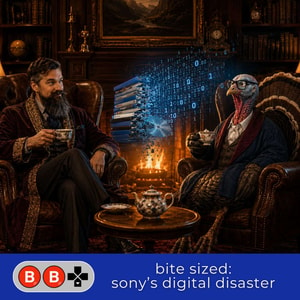
Settle in for a cozy fireside chat between Nate and Trash Turkey as they discuss the merits and pitfalls of Sony's all-digital future. While it's called a "bite sized" episode, it's the spirit of the thing that counts.
This episode was spurred on by a voice chat session that Nate opened up in our Discord. To join in, check out our Linktree: https://linktr.ee/thebacklogbreakdown
And check out our newsletter on Substack: https://thebacklogbreakdown.substack.com
And if you'd like to support us, you can visit our Patreon: https://www.patreon.com/thebacklogbreakdown
The Backlog Breakdown is a proud member of the Play Well Network, a network of podcasts that seek to approach recreation in a more thoughtful manner. Until there is a rabbit trail to follow. Check out all of the other amazing Play Well podcasts at playwellnetwork.com. Get PWNed, scrubs.